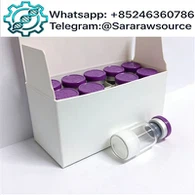




Testagen is neither a precursor of any hormone nor a direct receptor agonist. Its chemical nature is almost minimalist-four amino acid residues arranged in a linear sequence of Lys-Glu-Asp-Gly (KEDG), with a molecular weight of less than 500 Daltons, yet it embodies a regulatory philosophy drastically different from conventional endocrine interventions. This molecule originates from decades of research on tissue-specific short peptides by Khavinson's team at the Institute of Bioregulation and Gerontology in St. Petersburg, Russia, with its initial isolation traceable to the bioactive components of testicular tissue extracts.
Core Functions:
In in vitro cell and animal model systems, Testagen primarily acts on the anterior pituitary and testicular interstitial cells, regulating the efficiency of hypothalamic-pituitary-gonadal axis signal transduction. It can improve the metabolic state of testicular interstitial cells, supporting the biosynthesis of endogenous testosterone; maintain the physiological morphology of gonad-related cells, slowing down age-related functional degeneration of glands; assist in exploring gene expression regulation during spermatogenesis; and also indirectly intervene in the pituitary-thyroid pathway, affecting the release rhythm of thyroid-stimulating hormone, and relating to basal metabolism-related topics. In some models, it has been observed to alleviate low-grade pelvic inflammation and has also been used to study the mechanism of functional reconstruction after endocrine axis damage. It is suitable for comparing the biological differences between hormone replacement therapy and peptide-based biological regulation.
Mechanism of Action
The positively charged lysine residue is responsible for membrane tracing and nuclear entry; the two acidic residues (Glu/Asp) carry a net charge of -2 at physiological pH, electrostatically attaching to the DNA minor groove and histone H3/H4 tails, hypothetically releasing heterochromatin in the StAR promoter region, allowing RNA Pol II to ascend-belonging to the same explanation as Khavinson's "short peptide directly reads the promoter," not receptor agonism, kinase phosphorylation, or ion channeling. It does not bind to AR, LH receptors, or inhibit aromatase; it purely performs fine-tuning at the transcriptional access layer. Cell penetration relies on positively charged residues rather than the classic CPP sequence, resulting in a short nuclear residence time and an in vitro half-life on the order of 2–4 hours.
Storage Conditions
Lyophilized Powder: -20℃, sealed, protected from light and desiccant, stable for 24 months; short-term storage: 2–8℃, do not exceed 6 months, do not place on the refrigerator door shelf. Before opening, bring to room temperature before puncturing the stopper to prevent condensation and hydrolysis. Reconstitution (sterile water/benzyl alcohol-containing antibacterial water/PBS, slowly push along the wall and gently rotate without shaking): 2–8℃, protected from light, 7–28 days (manufacturer range varies, conservatively 7–14 days). Aliquoting to small portions: -20℃ can extend storage time, but repeated freeze-thaw cycles should be avoided; discard if the solution is cloudy, flocculent, or caramel-colored. Contains many acidic residues; if the pH is alkaline, it is prone to isomerization; do not reconstitute with sodium bicarbonate solution.
Precautions
RUO markings indicate no access for human contact. Any subcutaneous/intramuscular injection for personal use violates regulatory red lines; resold vials and clinical drugs are two different matters.
The reconstitution concentration is calculated experimentally: 20mg powder plus 2mL BAC water yields 10mg/mL. 100μg is drawn into 0.01mL (1 unit insulin injection). Visually estimating the vial size is strictly prohibited; use a low-adsorbent polymerase and log.
The COA must be HPLC ≥98%, MS identification, endotoxin level, and no excessive TFA residue; without a COA, the powder is considered waste.
Pregnancy/breastfeeding, history of prostate cancer/breast estrogen sensitivity, androgen-dependent tumors, severe liver or kidney damage-avoid this treatment; the theoretical off-target risk is no less than that of TRT.
Redness, slight swelling, and transient hot flashes at the injection site are considered noise; persistent prostate discomfort, breast tenderness, emotional agitation, and abnormal fluctuations in libido require immediate discontinuation of the vial.
Hot Tags: scientific experimental peptide testagen cas: 1026993-38-3, China scientific experimental peptide testagen cas: 1026993-38-3 manufacturers, suppliers, factory