

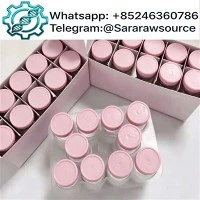


Instructions for Use
Commercially available Aicar products are mostly lyophilized powders. For reconstitution, it is recommended to use 10 mM hydrochloric acid solution, 1% acetic acid, or antibacterial aqueous solution. Before operation, allow the vial to warm to room temperature. Draw solvent into a sterile syringe and slowly inject along the inner wall of the vial, allowing the powder to self-wet. Then, gently roll the vial in the palm of your hand to aid dissolution; shaking is strictly prohibited. The reconstitution concentration is usually controlled between 1 and 10 mg/mL, depending on injection volume preference-higher concentrations result in smaller injection volumes, but may prolong dissolution time.
The primary route of administration is subcutaneous injection, which can be administered via the abdomen, lateral thigh, or upper arm subcutaneous fat layer, rotating the injection site daily. Oral bioavailability is extremely low; in animal studies, very high doses (500 mg/kg) are required to achieve effective exposure. Therefore, oral administration is almost never used in human investigations. Intravenous infusion is only used in controlled clinical settings, such as in cardiac surgery myocardial protection protocols, where a continuous infusion of 0.1 mg/kg/min is administered for approximately 7 hours, with a total dose of approximately 42 mg/kg.
Investigational subcutaneous regimens typically involve a daily dose of 1 to 5 mg for 4 to 6 weeks, followed by a rest period of at least equal length. Because Aicar significantly enhances glucose uptake by skeletal muscle, 25 to 50 grams of rapidly absorbed carbohydrates should be ingested within 15 to 30 minutes after administration to prevent hypoglycemia. Dosage on an empty stomach is strictly prohibited, especially at bedtime-nocturnal hypoglycemia is difficult to detect promptly. New users should start with a low dose (e.g., 1 mg daily) and observe glycemic tolerance for 3 to 7 days before deciding whether to increase the dose.
Application Scenarios (Research Boundaries)
AMPK Signaling Anatomy: Positive diagnostic tools for p-AMPK Thr172, ACC, ULK1, and PGC-1α pathways; benchmark controls for new drug screening.
Motor Simulation and Muscle Biology: Sedentary animal endurance, II→I fiber transition, mitochondrial density, sarcopenia (muscle atrophy) models.
Metabolic Disease Research: Insulin-independent glucose uptake in type 2 diabetes mellitus (T2DM), fatty liver in obesity, fibrosis in NAFLD, pancreatic β-cell stress protection.
Immune Metabolism: Obesity-related asthma, macrophage polarization in atherosclerotic plaques, microglial inflammation.
Cerebral Ischemia-Reperfusion: Acadesine's Phase 3 CABG trial did not reach its endpoint, but it is still used as an I/R protective probe at the cellular/animal level.
Oncology: AMPK-dependent proliferation inhibition has been used in specific hematologic/solid tumor models, but long-term systemic activation has a double-edged sword effect of promoting survival and is not included in human tumor self-help programs.
Anti-doping: WADA has listed this as an S4 metabolic modulator since 2009, banned both in and out of competition; urinary ZMP/AICAR ratio + ¹³C isotope ratio mass spectrometry distinguishes between endogenous and exogenous substances, and a single oral dose can be detected for >40 hours.
It is not a fitness supplement, not a legal "sports pill," and should not be used for long-term human intervention. Any contact with it by any competitive athlete is a violation.
Storage Method:
Unreconstituted lyophilized powder is most stable when sealed and protected from light. Deep freezing at -20°C can preserve it for 2 to 3 years; refrigeration at 2 to 8°C maintains its activity for approximately 36 months; short-term storage at room temperature (dry, protected from light) for several weeks has limited impact. Before opening, ensure the bottle is brought to room temperature to prevent condensation.
The stability of the reconstituted solution decreases sharply. After reconstitution with antibacterial water, it must be stored at 2 to 8°C and should be used within 28 to 30 days. If the stock solution is prepared with DMSO, it can be aliquoted and stored for approximately one year at -80°C, and only for approximately one month at -20°C. Repeated freeze-thaw cycles are strictly prohibited-ice crystal formation and temperature fluctuations will irreversibly damage the molecular structure. Light exposure accelerates oxidative degradation; after reconstitution, it should be placed in its original packaging, an amber container, or tightly wrapped in aluminum foil to protect it from light.
To minimize the risk of contamination from repeated punctures of the rubber stopper, immediately aliquot the reconstituted solution into sterile, low-absorption tubes, labeling them with the date and concentration, and use only as needed. Disinfect the rubber stopper with alcohol before each operation, use a sterile needle, and promptly return it to its refrigerated location afterward. If the solution becomes cloudy, discolored, or precipitates, it should be discarded immediately, regardless of whether it is within its expected shelf life.
FAQ
Q: What is the minimum order quantity?
A: The minimum order quantity is 10 bottles/set.
Q: How long does it take to ship?
A: In-stock orders will be shipped within 24 hours.
Q: What purity level can you provide?
A: Standard purity 99%.
Q: Which courier service do you use?
A: FedEx, DHL, UPS, and postal services are all available.
Q: How long does shipping take?
A: Approximately 10-15 days.
Q: Can you provide a COA (Certificate of Account) quality inspection report and HPLC (High-Performance Computing) report?
A: Yes, all goods undergo professional testing before shipment.
Q: Do you support OEM/ODM?
A: OEM/ODM service is supported, subject to minimum order quantity requirements.
Q: What are your after-sales service terms?
A: After the customer receives the goods, if the quality problem is confirmed to be caused by our production, they can enjoy free replacement or refund. We adhere to a pragmatic and responsible service principle, actively responding to and properly handling all kinds of issues, without shirking responsibility or avoiding problems, and fully protecting customer rights.
Q: What payment methods are available?
A: We support bank transfer, Bitcoin, Transferwise, and Xoom.
Instructions for Use
Commercially available Aicar products are mostly lyophilized powders. For reconstitution, it is recommended to use 10 mM hydrochloric acid solution, 1% acetic acid, or antibacterial aqueous solution. Before operation, allow the vial to warm to room temperature. Draw solvent into a sterile syringe and slowly inject along the inner wall of the vial, allowing the powder to self-wet. Then, gently roll the vial in the palm of your hand to aid dissolution; shaking is strictly prohibited. The reconstitution concentration is usually controlled between 1 and 10 mg/mL, depending on injection volume preference-higher concentrations result in smaller injection volumes, but may prolong dissolution time.
The primary route of administration is subcutaneous injection, which can be administered via the abdomen, lateral thigh, or upper arm subcutaneous fat layer, rotating the injection site daily. Oral bioavailability is extremely low; in animal studies, very high doses (500 mg/kg) are required to achieve effective exposure. Therefore, oral administration is almost never used in human investigations. Intravenous infusion is only used in controlled clinical settings, such as in cardiac surgery myocardial protection protocols, where a continuous infusion of 0.1 mg/kg/min is administered for approximately 7 hours, with a total dose of approximately 42 mg/kg.
Investigational subcutaneous regimens typically involve a daily dose of 1 to 5 mg for 4 to 6 weeks, followed by a rest period of at least equal length. Because Aicar significantly enhances glucose uptake by skeletal muscle, 25 to 50 grams of rapidly absorbed carbohydrates should be ingested within 15 to 30 minutes after administration to prevent hypoglycemia. Dosage on an empty stomach is strictly prohibited, especially at bedtime-nocturnal hypoglycemia is difficult to detect promptly. New users should start with a low dose (e.g., 1 mg daily) and observe glycemic tolerance for 3 to 7 days before deciding whether to increase the dose.
Application Scenarios (Research Boundaries)
AMPK Signaling Anatomy: Positive diagnostic tools for p-AMPK Thr172, ACC, ULK1, and PGC-1α pathways; benchmark controls for new drug screening.
Motor Simulation and Muscle Biology: Sedentary animal endurance, II→I fiber transition, mitochondrial density, sarcopenia (muscle atrophy) models.
Metabolic Disease Research: Insulin-independent glucose uptake in type 2 diabetes mellitus (T2DM), fatty liver in obesity, fibrosis in NAFLD, pancreatic β-cell stress protection.
Immune Metabolism: Obesity-related asthma, macrophage polarization in atherosclerotic plaques, microglial inflammation.
Cerebral Ischemia-Reperfusion: Acadesine's Phase 3 CABG trial did not reach its endpoint, but it is still used as an I/R protective probe at the cellular/animal level.
Oncology: AMPK-dependent proliferation inhibition has been used in specific hematologic/solid tumor models, but long-term systemic activation has a double-edged sword effect of promoting survival and is not included in human tumor self-help programs.
Anti-doping: WADA has listed this as an S4 metabolic modulator since 2009, banned both in and out of competition; urinary ZMP/AICAR ratio + ¹³C isotope ratio mass spectrometry distinguishes between endogenous and exogenous substances, and a single oral dose can be detected for >40 hours.
It is not a fitness supplement, not a legal "sports pill," and should not be used for long-term human intervention. Any contact with it by any competitive athlete is a violation.
Storage Method: Unreconstituted lyophilized powder is most stable when sealed and protected from light. Deep freezing at -20°C can preserve it for 2 to 3 years; refrigeration at 2 to 8°C maintains its activity for approximately 36 months; short-term storage at room temperature (dry, protected from light) for several weeks has limited impact. Before opening, ensure the bottle is brought to room temperature to prevent condensation.
The stability of the reconstituted solution decreases sharply. After reconstitution with antibacterial water, it must be stored at 2 to 8°C and should be used within 28 to 30 days. If the stock solution is prepared with DMSO, it can be aliquoted and stored for approximately one year at -80°C, and only for approximately one month at -20°C. Repeated freeze-thaw cycles are strictly prohibited-ice crystal formation and temperature fluctuations will irreversibly damage the molecular structure. Light exposure accelerates oxidative degradation; after reconstitution, it should be placed in its original packaging, an amber container, or tightly wrapped in aluminum foil to protect it from light.
To minimize the risk of contamination from repeated punctures of the rubber stopper, immediately aliquot the reconstituted solution into sterile, low-absorption tubes, labeling them with the date and concentration, and use only as needed. Disinfect the rubber stopper with alcohol before each operation, use a sterile needle, and promptly return it to its refrigerated location afterward. If the solution becomes cloudy, discolored, or precipitates, it should be discarded immediately, regardless of whether it is within its expected shelf life.
FAQ
Q: What is the minimum order quantity?
A: The minimum order quantity is 10 bottles/set.
Q: How long does it take to ship?
A: In-stock orders will be shipped within 24 hours.
Q: What purity level can you provide?
A: Standard purity 99%.
Q: Which courier service do you use?
A: FedEx, DHL, UPS, and postal services are all available.
Q: How long does shipping take?
A: Approximately 10-15 days.
Q: Can you provide a COA (Certificate of Account) quality inspection report and HPLC (High-Performance Computing) report?
A: Yes, all goods undergo professional testing before shipment.
Q: Do you support OEM/ODM?
A: OEM/ODM service is supported, subject to minimum order quantity requirements.
Q: What are your after-sales service terms?
A: After the customer receives the goods, if the quality problem is confirmed to be caused by our production, they can enjoy free replacement or refund. We adhere to a pragmatic and responsible service principle, actively responding to and properly handling all kinds of issues, without shirking responsibility or avoiding problems, and fully protecting customer rights.
Q: What payment methods are available?
A: We support bank transfer, Bitcoin, Transferwise, and Xoom.
Hot Tags: aicar 50mg/vial (for improving aerobic metabolic capacity and endurance) cas: 3031-94-5, China aicar 50mg/vial (for improving aerobic metabolic capacity and endurance) cas: 3031-94-5 manufacturers, suppliers, factory


