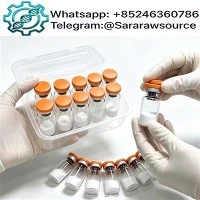




Applications
Currently, HGH Fragment 176-191 is primarily used as a research peptide in the following areas:
Metabolic research. This fragment is a commonly used tool for studying the regulatory mechanisms of lipolysis and lipogenesis, and for exploring lipid metabolism intervention pathways that do not rely on GH receptor activation.
Body weight and body composition research. In animal models, this fragment is used to evaluate the feasibility of selectively reducing fat without affecting lean body mass or glucose metabolism.
Oncology research. A 2022 study published in *Drug Design, Development and Therapy* demonstrated that HGH Fragment 176-191 binds with high affinity to Ki-67, MiB proteins, and estrogen receptors, and enhances the toxicity of doxorubicin-loaded chitosan nanoparticles against MCF-7 breast cancer cells. This provides preliminary evidence for the potential use of this fragment as an adjuvant in targeted delivery systems.
It should be noted that this peptide is not currently approved by the FDA or any major regulatory agency for human therapeutic use and is classified as a prohibited substance (Category S2) by the World Anti-Doping Agency (WADA).
Mechanism of Action
The mechanism of action of HGH Fragment 176-191 differs fundamentally from that of full-length hGH. Full-length hGH activates the JAK2/STAT5 signaling pathway by binding to the GH receptor, thereby promoting hepatic IGF-1 production and mediating skeletal growth, protein synthesis, and the regulation of glucose metabolism. In contrast, the 176-191 fragment does not activate the GH receptor or increase IGF-1 levels; its biological effects are primarily confined to adipose tissue.
Specifically, the fragment functions through the following pathways:
Activation of lipolysis. Research indicates that the fragment stimulates hormone-sensitive lipase (HSL) in adipocytes, breaking down stored triglycerides into free fatty acids and glycerol, which are released into the bloodstream for use as energy by the body. This effect is believed to be associated with pathways mediated by β3-adrenergic receptors on adipocytes.
Inhibition of lipogenesis. This fragment simultaneously reduces the activity of fatty acid synthase and acetyl-CoA carboxylase, inhibiting *de novo* lipogenesis and creating a dual-action effect of "promoting breakdown while inhibiting synthesis."
It has no effect on the GH axis. Due to the absence of the N-terminal receptor-binding domain, the fragment does not trigger the JAK-STAT pathway; consequently, it does not cause the typical side effects associated with full-length hGH, such as elevated IGF-1 levels, water and sodium retention, joint pain, or insulin resistance. This is the primary reason it is positioned in research as a "selective lipolytic tool."
**Theoretical Benefits in Bodybuilding**
In the fields of fitness and bodybuilding, research into HGH Fragment 176-191 focuses on body composition optimization, with theoretical advantages in the following areas:
Targeted fat loss. Animal studies indicate that the fragment preferentially mobilizes visceral and subcutaneous fat stores. In obese Zucker rat models, it demonstrated fat-loss effects comparable to-or even superior to-full-length GH, without inducing hyperglycemia. This selectivity is of particular interest for addressing stubborn fat deposits during bodybuilding contest preparation.
Preservation of lean body mass. Since the fragment does not activate the GH receptor and produces no anabolic effects, it theoretically does not directly interfere with muscle maintenance during fat loss-though this also means it does not promote muscle growth. Its value lies in the synergistic positioning of "losing fat without losing muscle."
No interference with glucose metabolism. Long-term use of full-length GH often leads to elevated fasting blood glucose and insulin resistance; in contrast, studies have shown that the 176-191 fragment has no significant impact on fasting blood glucose, insulin levels, or HbA1c. For bodybuilders strictly controlling carbohydrate intake, this characteristic simplifies metabolic management.
Synergy with GH secretagogues. In practical community use, this fragment is often combined with GH secretagogues such as CJC-1295 and Ipamorelin; the fragment handles the specific regulation of lipolysis, while the secretagogues provide the recovery and muscle-preserving effects associated with GH pulses. Their mechanisms do not overlap, theoretically allowing for a complementary effect.
Successful Cases
It must be candidly stated that high-quality human clinical data for HGH Fragment 176-191 is extremely limited. Currently, the only retrievable systemic safety data in humans comes from the Heffernan trial: a regimen of 300 mcg twice daily for 12 weeks showed no serious adverse events, and no significant changes were observed in fasting blood glucose, insulin sensitivity, liver enzymes, cardiovascular parameters, or IGF-1 levels.
AOD9604 (a stabilized tyrosine-modified analog of 176-191) underwent more extensive clinical development; while Phase I and IIa trials revealed no major safety signals, the largest Phase IIb weight-loss trial failed to meet its primary endpoint with statistical significance, leading to the termination of development in 2007.
At the community level, aggregated data from 70 user reports indicate that a regimen of 250–500 mcg injected 1–2 times daily in a fasted state is the most common practice; some users reported subjective fat loss when combined with dietary control. However, these data are anecdotal rather than based on controlled evidence and may be confounded by variables such as diet, exercise, and the placebo effect.
The conclusion is one of caution: existing evidence supports the mechanism-specific lipolytic activity of this fragment in animal models, but its fat-loss efficacy in humans has not been confirmed by rigorous clinical trials. Any claims promoting it as a "definitive fat-loss solution" lack scientific basis.
Why Choose Us
In the field of research-grade peptides, product consistency, purity, and traceability directly determine the reliability of experimental results. As a primary manufacturer, we offer the following core advantages:
Professional Production Equipment. We possess production facilities designed for large-scale peptide synthesis, covering the entire workflow-from solid-phase synthesis and HPLC purification to lyophilization-to ensure batch-to-batch consistency. Every batch undergoes HPLC purity analysis and mass spectrometry verification for molecular weight confirmation; Certificates of Analysis (COA) are available.
Stable Supply. Our direct-from-factory model eliminates the uncertainties associated with intermediaries. We maintain optimal inventory levels of key intermediates and finished products, enabling rapid response to standard orders and minimizing experimental disruptions caused by supply chain fluctuations.
Consistent purity and quality. HGH Fragment 176-191 requires a sophisticated synthesis process, specifically regarding the correct formation of the disulfide bond (Cys7-Cys14). Through controlled oxidative folding and purification protocols, we ensure the target peptide's secondary structure aligns with theoretical specifications, maintaining a purity of ≥95% (with ≥98% custom specifications available).
After-sales support. We provide technical consultation, including reconstitution protocols, storage recommendations, and troubleshooting assistance for common experimental issues. Should testing reveal quality defects, we offer a return and replacement guarantee to ensure the continuity of your research.
FAQ
Q: Where are your products manufactured?
A: Our products are manufactured in Shenzhen, China.
Q: What is the minimum order quantity (MOQ)?
A: The minimum order quantity is 10 vials/sets.
Q: What is your shipping turnaround time?
A: Orders for in-stock items are shipped within 24 hours.
Q: What purity levels do you offer?
A: Our standard purity is 99%.
Q: Which shipping carriers do you use?
A: We offer shipping via FedEx, DHL, UPS, and postal services.
Q: How long does shipping take?
A: Approximately 10–15 days.
Q: Do you provide COA (Certificate of Analysis) and HPLC (High-Performance Liquid Chromatography) reports?
A: Yes, these are available; all products undergo professional testing prior to shipment.
Q: Do you offer OEM/private labeling services?
A: Yes, OEM services are available, subject to minimum order quantity requirements.
Q: How do you handle after-sales issues?
A: If a quality issue attributable to our manufacturing is confirmed after delivery, we offer free replacement or a refund. We are committed to a pragmatic and responsible service approach, actively addressing and resolving issues without evasion or excuses, while fully safeguarding our customers' interests. Q: What payment methods are available?
A: We accept bank transfers, Bitcoin, TransferWise, and Xoom.
Hot Tags: hgh 176-191 (fragment) 2mg/vial – high-purity research peptide – chinese supplier, China hgh 176-191 (fragment) 2mg/vial – high-purity research peptide – chinese supplier manufacturers, suppliers, factory