

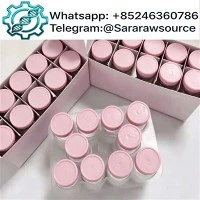


Instructions for Use
Reconstitution Specifications: This product is in lyophilized powder form and must be reconstituted using bacteriostatic water for injection. For example, in the common 5mg dosage, 2mL to 3mL of bacteriostatic water is typically added to achieve a final concentration of 1.67mg/mL to 2.5mg/mL. During reconstitution, the liquid must be slowly injected along the inner wall of the vial; direct impact on the powder is strictly prohibited. After reconstitution, gently roll the vial to dissolve the powder; vigorous shaking is absolutely prohibited to prevent peptide bond breakage.
Route and Frequency of Administration: Subcutaneous injection is the standard route, typically administered in the abdominal region. Due to its short half-life, it cannot maintain a continuous blood concentration throughout the day; therefore, a high-frequency dosing regimen is necessary. The standard procedure is 1 to 3 injections daily. To best align with the body's natural hormonal secretion rhythm, administration before bedtime (on an empty stomach) is considered the optimal choice.
Dosage Titration: A single standard dose is typically set between 100mcg and 200mcg. For first-time users, it is recommended to start with a low dose of 100 mcg/day, observe the body's tolerance, and gradually titrate to a maintenance dose of 200 mcg to 300 mcg/day over several weeks.
Cyclical Management: To prevent pituitary receptor desensitization and maintain the sensitivity of the endogenous secretory axis, a cyclical intervention protocol is recommended. Typically, after 8 to 12 weeks of continuous use, a 4-week washout period (Hormone Holiday) is required.
Mod GRF 1-29 has not yet been approved by the FDA or any major regulatory agency for clinical treatment; it is classified as an investigational compound. Published human clinical data are concentrated in the DAC version (Teichman et al., 2006). No human clinical trials without the DAC version have been publicly reported. Existing protocols are based on extrapolation from GHRH pharmacology, animal experimental data, and DAC version clinical data.
Its research applications include:
1. GH Pulse Dynamics Research: Utilizing the short half-life characteristic, precisely controlling the time window of GH release to study the dose-response relationship between pulse frequency, amplitude, and downstream IGF-1 synthesis and tissue response.
2. Body Composition and Metabolism Research: Exploring the potential for improving lean body mass maintenance, lipid oxidation, and bone metabolism indicators through multiple daily pulsed GH stimulation. Animal models show that daily administration of GHRH analogs can restore the growth rate of GHRH gene knockout mice to a level comparable to daily exogenous GH injection.
3. Sleep and Recovery Research: GH pulses are deeply coupled with slow-wave sleep; bedtime administration can amplify the nocturnal physiological GH peak. Research directions cover sleep quality, post-exercise recovery, and tissue repair.
4. Combination Therapy Mechanism Research: The combination with growth hormone-releasing peptide (GHRP) such as Ipamorelin constitutes the core of current research. GHRH-R agonists (Mod GRF 1-29) and GHSR-1a agonists (Ipamorelin) act on different receptor pathways of the same somatotroph: the former "sensitizes" the pituitary gland, while the latter "triggers" release. A Phase I study by Bowers et al. in 1990 confirmed that the GH release from the combined use of the two drugs far exceeded the arithmetic sum of their individual effects, exhibiting a supra-additive synergistic effect.
Storage Conditions
Lyophilized Powder: Long-term storage at -20℃ (ideally -80℃), protected from light, dry and sealed, can last 1–2 years; short-term storage at 2–8℃ is also acceptable but the shelf life is shorter. Do not store at room temperature for extended periods.
Reconstituted Liquid: Refrigerate at 2–8℃, protected from light, and use within 14–30 days (most laboratories cap this at 2–4 weeks). Do not freeze or repeatedly freeze-thaw.
Before reconstitution, allow the lyophilized powder to reach room temperature before opening the cap to prevent condensation from entering the bottle; discard the solution if it turns yellow, becomes cloudy, or contains suspended particles.
Do not use DAC-free buffers containing free thiol (DTT, β-ME) – although they are not conjugated by albumin, the cysteine side chain environment can still be disturbed by reducing agents, and aseptic technique is essential.
FAQ
Q: What is the minimum order quantity? A: Minimum order quantity is 10 bottles/set.
Q: How long does it take to ship?
A: In-stock orders will be shipped within 24 hours.
Q: What purity level can you provide?
A: Standard purity 99%.
Q: Which courier service do you use?
A: FedEx, DHL, UPS, and postal services are available.
Q: How long does shipping take?
A: Approximately 10-15 days.
Q: Can you provide a COA (Certificate of Analysis) report and HPLC (High-Performance Computing) report?
A: Yes, all goods undergo professional testing before shipment.
Q: Do you support OEM/ODM?
A: OEM/ODM service is supported, subject to minimum order quantity requirements.
Q: How is after-sales service handled?
A: After the customer receives the goods, if the quality problem is confirmed to be caused by our production, they can enjoy free replacement or refund. We adhere to a pragmatic and responsible service principle, actively responding to and properly handling all kinds of issues, without shirking responsibility or avoiding problems, and making every effort to protect customer rights. Q: What payment methods are available?
A: We support bank transfers, Bitcoin, Transferwise, and Xoom.
Hot Tags: factory wholesale 99% purity cjc1295 without dac cas: 863288-34-0, China factory wholesale 99% purity cjc1295 without dac cas: 863288-34-0 manufacturers, suppliers, factory


