

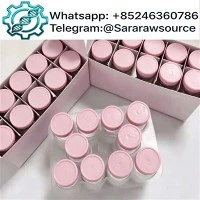


This combination is known in regenerative medicine as the "Repair Trio," with its core focus on full-thickness tissue regeneration and damage repair. BPC-157 is a 15-amino acid gastric-derived pentapeptide responsible for initiating deep repair processes-promoting angiogenesis, accelerating tendon and ligament healing, stabilizing neuromuscular junctions, and repairing the gastrointestinal mucosal barrier.
Main Functions
BPC-157 (15-amino acid, gastrin-derived pentapeptide): Upregulates VEGF/VEGFR2 and eNOS→NO release, promoting capillary angiogenesis; promotes cell adhesion and migration via the FAK-paxillin axis; PI3K/Akt has anti-apoptotic effects; bidirectionally regulates TGF-β (promoting healing without scarring); inhibits TNF-α/IL-6/NF-κB. Gastrointestinal mucosa, tendons, ligaments, and nerve endings all respond to this signaling.
TB500 (Thymosin β4 core fragment Ac-LKKTETQ, marketed 10 mg versions mostly contain this fragment rather than the full-length 4.9 kDa Tβ4): chelates G-actin monomers, regulating actin polymerization → migration of keratinocytes/endothelial cells/fibroblasts to the injury area; promotes VEGF upregulation and angiogenesis; downregulates MIF and inflammatory cytokines; inhibits excessive collagen deposition during post-injury remodeling, reducing scarring.
GHK-Cu (Gly-His-Lys·Cu²⁺ copper tripeptide, blue complex): fibroblast integrin → promotes TGF-β1 upregulation, increases type I/III procollagen and elastin/GAG; simultaneously suppresses MMP-1/2/9 and increases TIMP, tilting the synthesis/degradation balance towards matrix building; promotes SOD/CAT/GPx upregulation to clear ROS; performs whole-genome reprogramming (Pickart data ~4000 genes), incidentally inhibiting TNF-α/IL-6. Copper also acts as a cofactor for lysyl oxidase to cross-link collagen, giving new collagen tensile strength.
The synergistic effect of these three components is as follows: BPC provides blood supply and growth factor substrate → TB500 brings repair cells to the site → GHK-Cu densifies and cross-links new collagen, hence the name "Glow" rather than a simple healing stack.
Application Scenarios: This combination is currently primarily used as a research reagent to explore the synergistic effects of peptides in tissue regeneration, sports injury recovery, and skin anti-aging. Under compliant medical regulatory frameworks (such as the 503A pharmacy legalization pathway currently being explored by the US FDA), it is envisioned for use in personalized medicine to accelerate soft tissue repair, improve skin quality, and alleviate chronic inflammation.
Storage Conditions
Upon receiving the product, please immediately place it in the refrigerator at 2-8℃! Do not leave it at room temperature, and especially avoid exposure to light. If it is in dry powder form, for long-term storage, it is best to freeze it directly at -20℃. Remember, never freeze a reconstituted liquid. Freezing will destroy those tens of milligrams of peptide chains, preventing you from generating data and costing you thousands of dollars in wasted effort.
Important Notes: First and foremost: There are no officially approved clinical dosage guidelines for this combination. The ratio of 10mg BPC-157 + 50mg GHK-CU + 10mg TB500 you see here is based on experience circulating in research communities and online forums, not a doctor's prescription.
The administration method is also crucial: BPC-157 is acid-resistant and can be taken orally; however, TB500 and GHK-CU have virtually no bioavailability when taken orally and must be administered subcutaneously or intramuscularly. Therefore, if you plan to use all three together, you will most likely need to use an injection – subcutaneously, rotating injection sites (abdomen, thigh, upper arm) to avoid local induration and fat atrophy. The entire procedure must be performed under sterile conditions. Alcohol wipes, disposable needles, and sterile syringes are all essential; otherwise, the risk of infection is serious.
Regarding side effects, acute toxicity in animal studies is very low, but long-term safety data in humans is almost nonexistent. BPC-157 theoretically may overstimulate angiogenesis (although current data show it can actually inhibit tumor-associated VEGF), and the broad effects of TB500 on the immune system and cell migration are not yet fully understood. Pregnant women, breastfeeding mothers, cancer patients, and people with severe liver or kidney disease should absolutely avoid it.
Finally, a heartfelt word: the mechanism of this combination sounds wonderful-BPC for road construction, TB500 for transporting people, and GHK-CU for building houses-logically a closed loop. However, the reality is that high-quality human clinical trials are extremely rare, with most evidence coming from rats and rabbits. Unless you are desperate and conventional treatments are truly ineffective, I don't recommend using yourself as a guinea pig. If you really want to try it, the only reliable way is to find a knowledgeable regenerative medicine doctor and use it under close monitoring-don't believe those online myths about "being cured in three days"-repair is a slow process and cannot be rushed.
Hot Tags: combination peptide glow (bpc 157 10mg + ghk-cu 50mg + tb500 10mg), China combination peptide glow (bpc 157 10mg + ghk-cu 50mg + tb500 10mg) manufacturers, suppliers, factory


