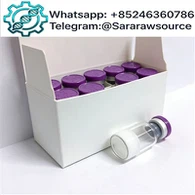


Cartalax (sequence: Ala-Glu-Asp, AED, tripeptide) is a tissue-specific chondroprotective bioregulator, belonging to the Russian Khavinson cytokine family.
Core Targets: Chondrocytes, articular cartilage, intervertebral discs.
Mechanism of Action: Epigenetic regulation-directly binds to chondrocyte DNA, upregulating the synthesis of type II collagen, proteoglycans, and aggrecans; downregulating MMP-9 (chondrodegrading enzyme) and aging markers (p16/p21/p53); activating SIRT-6 (longevity protein).
Target Areas: Cartilage regeneration, anti-inflammation, anti-aging, joint function repair.
Research Institution: St. Petersburg Institute of Bioregulation and Gerontology, Russia.
Principal Investigator: Professor Vladimir Khavinson (founder of the Russian peptide bioregulation field). Development Time: 1990s–2000s, as a product of a cartilage/connective tissue-specific peptide project.
Prototype Source: Initially isolated from bovine cartilage tissue, later chemically synthesized as an AED tripeptide, avoiding animal-derived impurities.
Design Philosophy: Tissue Specificity-One peptide is responsible for repairing only one type of tissue (compare: BPC-157's systemic effects).
2025–2026: Rising in popularity in the European and American sports medicine and anti-aging circles, it is referred to as a "cartilage-specific peptide."
Clinical Progress: Only in vitro/animal experiments + small-sample clinical trials in Russia; no large-scale double-blind RCTs; not approved by the FDA/EMA, classified as a research-only compound.
Comparison Hotspots: Often compared with BPC-157 and TB-500-Cartalax focuses on cartilage regeneration; BPC-157 focuses on ligament/tendon/mucosa; TB-500 focuses on cell migration/systemic repair.
2026 Update: Several overseas peptide suppliers have launched Cartalax 2–5mg oral capsules/lyophilized powder for injection, targeting bone and joint anti-aging, sports injuries, and osteoarthritis.

Sequence: Ala-Glu-Asp (AED), tripeptide.
CAS: 87815447.
Molecular Weight: Approximately 303 Da.
Purity: ≥ 98% (HPLC).
Bioavailability: Orally absorbed via intestinal peptide transporters (PepT1/PepT2); 10 times more potent than crude cartilage extract (effective concentration 200 vs 2000 ng/mL).
Stability: Powder at room temperature for 2 years; solution refrigerated at 2–8℃ for 30 days; frozen for 6 months.
1) Oral (mainstream, capsules)
Daily maintenance: 2–3 mg/day, on an empty stomach in the morning.
Joint discomfort/mild OA: 3–5 mg/day, 12 weeks as one cycle.
Sports injury/postoperative repair: 5 mg/day, for 8–12 weeks.
2) Subcutaneous injection (research/high-end users)
Initial: 2 mg/day (30 units).
Maintenance: 3–5 mg/day (45–75 units).
Cycle: 8–12 weeks, can be repeated after a 2-week break.
3) Key points of treatment:
Onset time: 3–4 weeks (gradual improvement).
Optimal cycle: 12 weeks (cartilage regeneration cycle).
Safe interval: No more than 16 weeks of continuous use, 2–4 weeks of rest before re-cycle.
Highly targeted to cartilage: Acts only on chondrocytes, without affecting other tissues.
Dual effect of regeneration + anti-inflammation: Promotes type II collagen synthesis + inhibits MMP-9 + anti-inflammation, treating both the symptoms and the root cause.
Anti-aging + Repair: Inhibits chondrocyte aging (p16/p21↓, SIRT-6↑), suitable for joint degeneration in middle-aged and elderly individuals.
Oral efficacy: No injection required, high compliance.
Good safety: Good short-term/long-term tolerability; no hormone-like side effects; does not interfere with the endocrine system.
**High potency**: 10 times more potent than crude cartilage extract, small dosage, strong effect.
Limited evidence: No large-scale human RCTs; data mostly from in vitro/animal/small Russian samples.
Not formally approved: Not a drug, not a health product, for research use only; efficacy cannot be publicly claimed in Europe and the United States.
Slow onset of action: Requires 3–4 weeks, not suitable for rapid pain relief in acute, severe pain.
High price: Purity ≥98%, cost per 12-week cycle is higher than ordinary glucosamine chondroitin.
Insufficient long-term data: Long-term safety beyond 2 years is unknown.
Osteoarthritis (OA): Knee/hip/hand joint degeneration, pain, stiffness, and limited range of motion.
Sports Injuries: Meniscus wear, cartilage contusion, synovitis, postoperative ligament repair.
Intervertebral Disc Degeneration: Cervical/lumbar disc herniation, degenerative low back pain, spinal cartilage aging.
Anti-aging of Joints in Middle-aged and Elderly Individuals: Prevention of cartilage loss, maintenance of joint elasticity, and delaying age-related functional decline.
Postoperative Rehabilitation: Arthroscopy, cartilage transplantation, and accelerated cartilage repair after orthopedic surgery.
Chronic Joint Pain: Nonspecific joint discomfort, aggravated by weather changes, and long-term strain.

Case 1: A 52-year-old female with bilateral knee OA (Grade III).
Regimen: Cartalax 5mg/day, orally for 12 weeks.
Results: Pain decreased by 40% at 4 weeks, joint range of motion increased by 30% at 8 weeks, and MRI at 12 weeks showed an average increase of 0.2mm in cartilage thickness; no rebound was observed 3 months after discontinuation. Case 2: 28-year-old basketball player, grade II meniscus injury.
Regimen: Cartalax 5mg/day + glucosamine, 8 weeks.
Results: Swelling subsided in 3 weeks, training resumed in 6 weeks, MRI scan at 8 weeks showed lesion healing; no dependence on hormones/painkillers.
Case 3: 45-year-old male, lumbar disc degeneration (L4–L5).
Regimen: Cartalax 3mg/day, 12 weeks.
Results: Lower back pain decreased by 50% in 6 weeks, lower limb numbness disappeared in 12 weeks; significantly improved tolerance to prolonged sitting/bending.
✅ Dietary Recommendations (Enhancing Effect)
High Protein: Fish, chicken breast, eggs, whey protein (promotes collagen synthesis).
Antioxidants: Blueberries, broccoli, nuts, vitamins C/E (reduces oxidative damage to cartilage).
Omega-3: Deep-sea fish, fish oil (enhances anti-inflammatory effects).
Hydration: 2–2.5L daily (cartilage contains 70% water; adequate hydration maintains elasticity).
❌ Contraindications
Pregnant/Breastfeeding women: Safety data is insufficient; contraindicated.
Allergic constitution: Contraindicated in individuals allergic to peptides or bovine products.
Severe hepatic or renal insufficiency: Metabolic risk; use with caution.
Acute systemic infection phase: Postponed use.
⚠️ Drug Interactions
Can be used in combination with: Glucosamine, chondroitin, MSM, fish oil, vitamin D (synergistic effect).
Avoid combined use: High-dose glucocorticoids (accelerate cartilage loss, counteracting the effect).
Potential immunosuppressants (may interfere with immune regulation).
Anticoagulants (warfarin): Monitor INR; dosage adjustment required.
💡 Practical Tips
Take on an empty stomach: Best absorbed 30 minutes on an empty stomach upon waking or before bedtime.
Persistence period: At least 8 weeks, 12 weeks optimal; cartilage repair is irreversible.
Not a substitute for acute treatment: For severe pain/acute injury, seek medical attention first. Cartalax is used for repair and prevention.
Hot Tags: cartalax suppliers, China cartalax suppliers manufacturers, suppliers, factory