



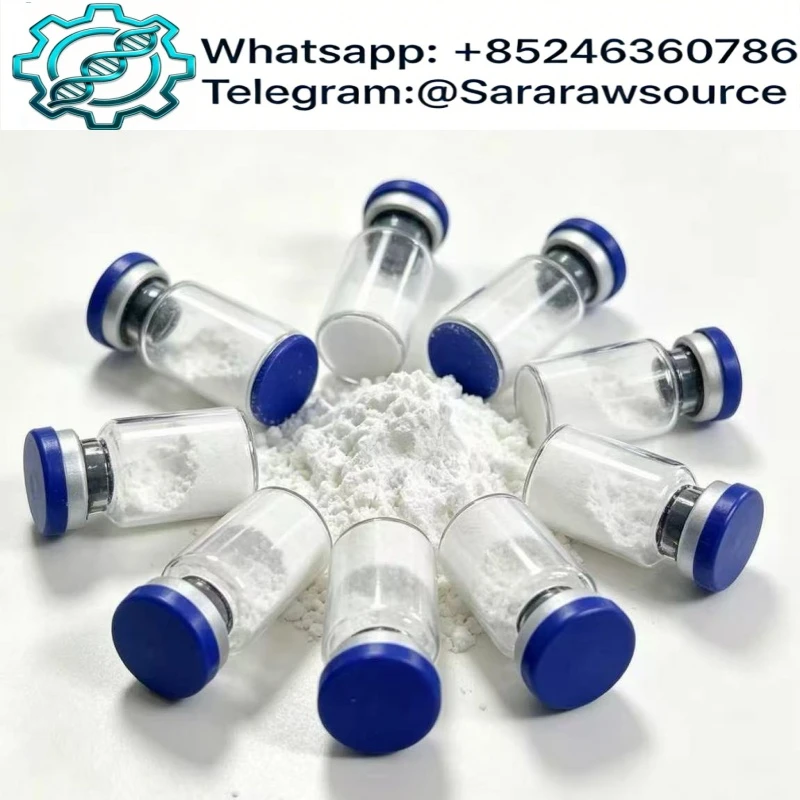
This bottle of BPC-157 5mg + TB-500 5mg is known in fitness and rehabilitation circles as the "Wolverine Stack"-a bottle of lyophilized powder containing 5mg of BPC-157 (a 15-peptide, cleaved from a protective protein found in human gastric juice) on the left and 5mg of TB-500 (a 43-peptide fragment from the synthesis of thymosin β-4) on the right, totaling 10mg co-soluble. Neither of these are FDA/EMA/NMPA approved drugs; the lyophilized powders circulating globally are all "research use only" from the grey market. Both are on Health Canada's list of illegally injected peptides seized in April 2026.
Main Functions and Physical Mechanisms
The appeal of this combination lies in its complementary, non-overlapping pathways:
BPC-157 tube, acting as a "local microenvironment": It utilizes the VEGFR2/eNOS/NO pathway, boosting VEGF and EGF to promote endothelial repair and new blood vessel growth; simultaneously, it suppresses inflammatory factors like TNF-α and IL-6, attracting fibroblasts to lay collagen. Its most notable function is protecting the gastric mucosa (originally discovered in gastric juice proteins), repairing tendons and ligaments, and receiving the most feedback on chronic training injuries such as tennis elbow, rotator cuff, and patellar tendinitis.
TB-500 tube, acting as a "systemic regulator": Its core function is to bind G-actin to lock in monomeric actin, allowing for rapid cytoskeleton reorganization. This significantly accelerates the migration of endothelial cells, fibroblasts, and keratinocytes to the injury site; incidentally, it activates the Akt survival pathway to resist apoptosis and clear MMP debris. It's more "systematic" than BPC, offering better feedback on large-area soft tissue tears, muscle tears, post-training recovery, and joint mobility.
In essence, TB-500 mobilizes the body's natural defenses, while BPU-157 prepares the necessary blood vessels, growth factors, and collagen environment-in animal tendon models, the combined use results in 40-60% greater tensile strength recovery compared to using either alone. However, this synergistic effect is currently only observed in animals/in vitro; there are zero RCTs for combined use in humans.
Storage Conditions
Lyophilized powder: Store sealed at -20℃, protected from light and in a dry place. Activity degradation is slow over 12-24 months; short-term storage at 2-8℃ for a few weeks is also acceptable, but avoid room temperature. Bring the bottle to room temperature before opening; otherwise, condensation inside will render the product unusable.
Reconstitute (slowly push 1–2.5ml of antibacterial water along the wall, do not pour directly onto the powder, do not vortex, gently roll): Refrigerate at 2–8℃, protected from light. BPC itself is durable and can last 4–8 weeks. TB-500 is more delicate and is best used within 4 weeks. For mixed bottles, use within 21–28 days according to the shortest shelf life. Never freeze the reconstituted solution; one freeze-thaw cycle will ruin TB.
A clear, colorless or very pale yellow solution is normal. Discard immediately if cloudy, discolored, or containing suspended particles.
Precautions and Personal Opinions
Both are on the WADA Prohibited List S0 (Unapproved Substances). Any athlete tested (physical fitness, powerlifting, triathlon, and even some combat sports) will test positive, regardless of dosage.
The biggest pitfall in the grey market is not the peptides themselves, but what's in the bottle that you don't know: Independently tested research-grade suppliers have been found to have insufficient content, mixed with other peptides, endotoxins, heavy metals, and solvent residues. If you're going to use it, at least find one with a third-party HPLC/MS COA; don't trust self-printed certificates from vendors.
The theoretical risks need to be explained in plain language: Both promote angiogenesis, and for people with existing but undiagnosed tumors, the mechanism "may feed the tumor." Although there's no evidence of carcinogenicity in humans, those with active cancer, a history of tumors, unexplained masses, or high genetic risk should avoid it; pregnant women, breastfeeding mothers, minors, and those in the active phase of an autoimmune disease should also avoid it.
Side effects are mostly mild: redness, itching, and induration at the injection site (alternating between the abdomen/thigh/upper arm), mild nausea, dizziness, and fatigue in the first few days, and occasional "brain fog" with TB-500. However, the FDA FAERS have actually received cases of shortness of breath requiring emergency room visits and recurrence of blackened gums-when problems arise with the combined vial, you can't even tell whose fault it is.
Community dosage (non-clinical): BPC 250–500 mcg/day subcutaneously; TB-500 loading phase: 2.5 mg Monday to Wednesday to five times/week; maintenance phase: 2.5 mg once a week; 4–6 weeks, then stop for 1–2 weeks. Don't blindly follow the rule of "dissolving the entire 5 mg vial and drawing a large tube daily"; miscalculating the units results in a difference of a thousand times between micrograms and milligrams.
Hot Tags: bpc-157 5mg + tb-500 5mg research peptide combo, China bpc-157 5mg + tb-500 5mg research peptide combo manufacturers, suppliers, factory


