

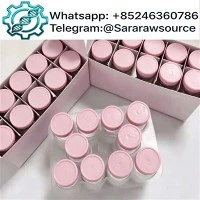


In the full lifecycle management of peptide drugs, storage is often considered the "last detail," rather than a critical point. However, for peptide molecules, which are composed of amino acid residues linked by amide bonds, the quality of storage conditions directly determines the product's bioactivity, safety, and shelf life. Even a seemingly minor temperature fluctuation or light exposure can trigger peptide chain degradation, aggregation, or conformational changes, causing the originally high-purity active pharmaceutical ingredient to lose its intended therapeutic value.
So, how important is the storage of peptide products? This article, starting from the chemical nature of peptides, systematically elucidates the risk mechanisms of improper storage and provides scientifically feasible storage solutions.
I. Why are Peptides "Fragile"? - Understanding Their Essence Through Structure
Peptides differ fundamentally from traditional chemically synthesized drugs. Small molecule drugs typically possess rigid, stable aromatic ring structures, while peptides are flexible linear molecules composed of amino acids linked by peptide bonds (-CO-NH-). Their stability faces multiple endogenous challenges:
**Peptide bond hydrolysis sensitivity:** Peptide bonds can undergo hydrolytic breakage in the presence of moisture, especially under extreme pH or high temperature conditions, where the hydrolysis rate increases exponentially.
**Secondary structure reversibility:** The α-helix, β-sheet, and other conformations of peptides rely on hydrogen bonds for maintenance; changes in temperature and solvent environment can lead to conformational inactivation.
**Chemical reactivity of side chain functional groups:** Peptides containing residues such as cysteine (thiol), methionine (thioether), and asparagine/glutamine (amide) are highly susceptible to chemical modifications such as oxidation and deamidation.
These structural characteristics mean that peptides are not "inert" molecules, but rather highly sensitive bioactive substances to environmental factors.
II. Four Types of Degradation Risks Due to Improper Storage
1. Chemical Degradation-Irreversible Damage at the Molecular Level
Hydrolysis: Peptide bond breakage is the most direct chemical degradation pathway. GLP-1 analogs such as Semaglutide exhibit significantly accelerated hydrolysis rates when stored in room temperature solution, leading to a decrease in the main peak content and an expansion of the impurity spectrum.
Oxidation: Methionine residues are readily oxidized to methionine sulfoxides, altering not only molecular polarity but also potentially affecting receptor binding affinity. The oxidation rate is further accelerated under light or metal ion catalysis.
Deamidation: Asparagine and glutamine residues can lose their amide groups under near-neutral or alkaline pH conditions to generate aspartic acid or glutamate, introducing a negative charge and altering the overall charge distribution and biological activity of the peptide.
2. Physical Degradation – Aggregation and Precipitation: In lyophilized or concentrated states, peptide molecules can form insoluble aggregates due to hydrophobic interactions, hydrogen bonds, or electrostatic attraction, commonly referred to as "flocculation" or "precipitation." Aggregation not only results in a loss of effective content but may also pose immunogenic risks-peptide aggregates are recognized as foreign substances by the immune system, inducing the production of anti-drug antibodies (ADA), leading to decreased efficacy or even treatment failure.
3. Conformation Changes – Loss of Activity
The biological function of peptides depends on specific spatial conformations. Taking GLP-1 receptor agonists as an example, their binding to the receptor requires the peptide chain to exhibit a specific folding pattern. Excessive storage temperature or pH fluctuations in the microenvironment caused by freeze-thaw cycles can cause the peptide chain to change from an active conformation to an inactive conformation. Even if the chemical structure remains unchanged, the biological activity is significantly reduced.
4. Microbial Contamination and Endotoxin Risk
For peptide products that require reconstitution, if the storage environment does not meet GMP requirements or the reconstituted solution is not aseptically treated, microbial proliferation will lead to excessive endotoxin levels, directly affecting product safety.
III. Scientific Storage Strategies – Lyophilized Powder as a "Protective Umbrella"
The Significance of Lyophilization
Preparing peptides into sterile lyophilized powder is currently recognized as the optimal storage form. The lyophilization process removes water through sublimation, "freezing" the peptide molecules in an anhydrous solid matrix, greatly reducing the reaction rate of hydrolysis and microbial proliferation. In the lyophilized powder state at -20℃ or -80℃, the chemical degradation rate of most peptides is minimized, achieving long-term stable storage for 1-3 years.
Storage Recommendations for Different Scenarios
Product Form | Storage Conditions | Stability Period | Precautions
Lyophilized Powder | -20℃ | Sealed and protected from light | 1-2 years | Avoid repeated opening and moisture absorption
Lyophilized Powder | -80℃ | 2-3 years | Suitable for long-term strategic reserves
Lyophilized Powder | 2-8℃ (Short-term) | Weeks to months | Requires strict sealing and moisture protection
Reconstituted Solution | 2-8℃ | Protected from light | 7-30 days (depending on product) | Recommended to add antibacterial agents, single-dispensing
IV. Storage is the "Last Line of Defense" for Product Quality
From production release to end-use, peptide products undergo multiple stages including warehousing, transportation, and distribution. These stages are precisely where quality risks are most uncontrollable. Even if the active pharmaceutical ingredient (API) achieves optimal purity and activity upon leaving the factory, failure to strictly adhere to storage conditions will result in accumulated degradation products and activity loss, causing the actual efficacy of the final product to fall far short of its labeled value.
For formulation development, storage stability data is the scientific basis for determining shelf life. The ICH Q1A guideline explicitly requires that storage conditions and shelf life of pharmaceutical products must be based on systematic stability study data, not empirical speculation.
In conclusion, storing peptide products is far more complex than simply "putting them in the refrigerator." It involves a multi-dimensional systems engineering approach encompassing peptide chemical stability, physical state control, packaging material compatibility, and microbial barriers. For manufacturers, providing scientific storage guidance is as important as stable production processes; for users, strictly adhering to storage conditions is the utmost respect for the product's value.