

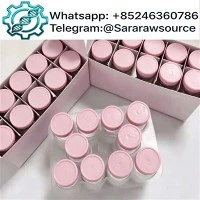


Chinese Name: Tesamorelin (Development Code TH9507, Trade Name Egrifta/Egrifta SV)
CAS Number: 218949-48-5
Structure: A synthetic human GHRH (1-44) analog composed of 44 amino acids, with an N-terminal tyrosine residue attached to a trans-3-hexenoyl group (resistant to DPP-IV degradation), and a C-terminal amidation.
Molecular Formula: C₂₂₁H₃₆₆N₇₂O₆₇S (free base)
Molecular Weight: Approximately 5135.9 Da
Appearance: White to off-white lyophilized powder
Purity: Research grade, general standard ≥98% (HPLC)
Solubility: Easily soluble in sterile water or acetic acid/antibacterial water, slightly soluble in pure organic solvents
Storage: Unreconstituted lyophilized powder -20℃, protected from light and moisture; after reconstitution, refrigerate at 2-8℃, recommended to use within 2-4 weeks, do not repeatedly freeze and thaw
Tesamorelin is a GHRH receptor agonist that specifically binds to growth hormone cells in the anterior pituitary gland, activating the Gs-AC-cAMP-PKA pathway → prompting the pituitary gland to synthesize and release endogenous growth hormone (GH) in a pulsatile manner → subsequently upregulating hepatic IGF-1.
Elevated GH specifically promotes visceral fat (VAT) lipolysis by activating adipocyte hormone-sensitive lipase (HSL), reducing triglyceride storage, significantly reducing deep abdominal fat, and having little effect on peripheral subcutaneous fat. Unlike direct injection of recombinant human growth hormone (rhGH), this preserves the hypothalamic-pituitary negative feedback loop, preventing GH levels from spiked to pathological levels and maintaining a closer approximation of physiological secretion rhythms.
Targeted reduction of visceral fat: Clinically proven to reduce visceral fat by approximately 15%–18% in 26 weeks, it is currently the most strongly supported VAT-reducing peptide and the only FDA-approved GHRH analog for HIV-related lipid metabolism disorders.
Preservation of physiological impulses: Unlike direct HGH injections that suppress the hypothalamic-pituitary axis, long-term use results in milder exogenous pituitary suppression.
No depletion of peripheral subcutaneous fat: Has virtually no effect on subcutaneous fat in the limbs, making it suitable for individuals with central obesity.
Additional benefits: Some studies show it can reduce liver fat content and improve NAFLD indicators.
IGF-1 and Blood Glucose Effects: Increases serum IGF-1 levels, potentially mildly worsening insulin sensitivity and raising fasting blood glucose/HbA1c. Use with caution in prediabetes.
Water and Sodium Retention and Joint Pain: Common side effects include peripheral edema, carpal tunnel syndrome-like finger numbness, and joint pain-this is the GH effect and not everyone can tolerate it.
Rebound Effect: Visceral fat will gradually rebound within months to a year after discontinuation; it is not a permanent solution.
Requires Functional Pituitary Gland: Completely ineffective or even contraindicated in patients with pituitary resection, pituitary tumors, or severe hypothalamic-pituitary axis damage.
Not a Weight Loss Drug: Overall weight change is minimal; only waist circumference decreases and body composition improves.
HIV-infected individuals with lipodystrophy – Original approved indication
Non-HIV individuals with significant visceral abdominal obesity, those concerned about metabolic risk (off-label research use)
For body composition optimization through diet and exercise, focusing on reducing visceral fat rather than pursuing a decrease in body weight.
Research Uses: GHRH receptor activity, GH pulse regulation, lipid metabolism-related in vitro/animal experiments
Contraindications: Pregnant women (pregnancy category X), active malignant tumors (GH/IGF-1 growth-promoting risk), pituitary dysfunction/tumor, allergy to raw materials or excipients such as mannitol
Use with caution in: Diabetes/impaired glucose tolerance (requires regular monitoring of fasting blood glucose/HbA1c), history of carpal tunnel syndrome, severe cardiovascular or renal disease
IGF-1 Monitoring: For continuous use, it is recommended to check serum IGF-1 every 3 months. If it remains > +3... SDS is considering reducing or suspending its use.
WADA Status: Classified as a growth hormone-releasing hormone analogue, it is listed on the anti-doping prohibited list. Competing athletes should not use it.
Raw Material Warning: Most commercially available raw materials are unregistered and labeled "For Research Use Only." Direct human injection is strictly prohibited. Always request a Certificate of Authorisation (COA) (HPLC+MS) when purchasing. The risk of counterfeit peptides/impurities is extremely high.
Hot Tags: Peptide Powder Tesamorelin, China Peptide Powder Tesamorelin manufacturers, suppliers, factory, 99 Purity TB500 Synthetic Peptide Raw Material Powder, High purity Peptide Raw Materials CJC1295 with DAC, Ipamorelin Research Peptide Raw Material Of Medical Grade, Medical grade Peptide Raw Material PT141, Medical grade Sermorelin Peptide, Premium Peptide Raw Materials BPC157


